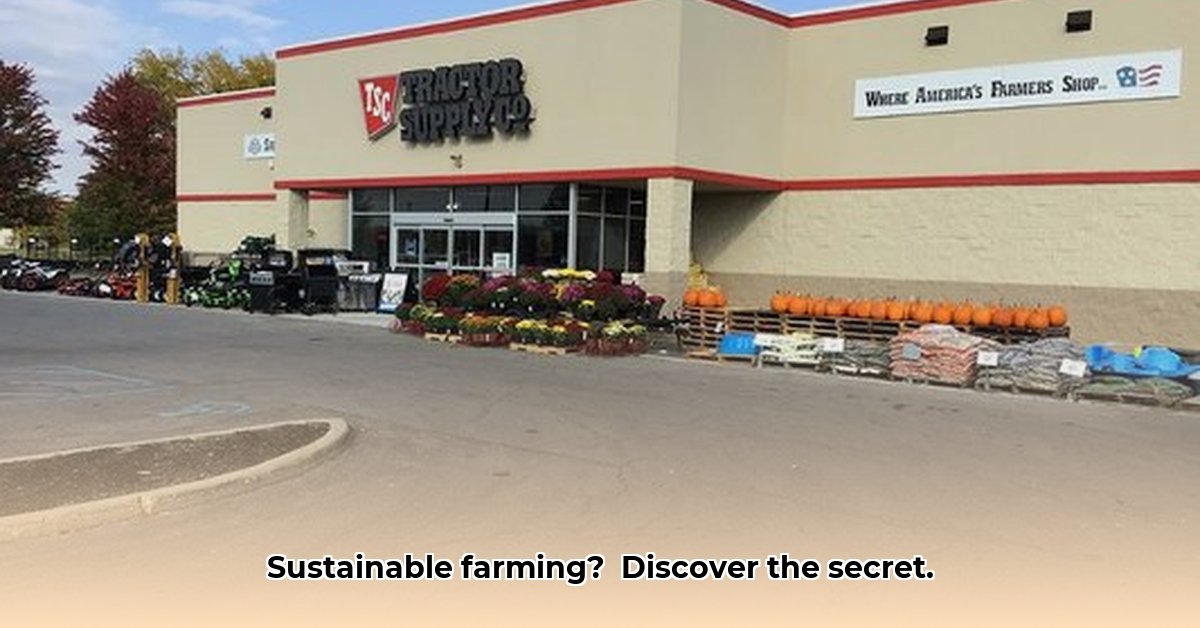
Sellersburg Tractor Supply plays a crucial role in the local community, serving farmers, gardeners, and pet owners. However, its contribution to sustainable agriculture requires closer examination. This article analyzes its product offerings, sustainability efforts, and identifies actionable steps for improvement. For more information, visit the Sellersburg Tractor Supply page.
Product Range & Accessibility
Sellersburg Tractor Supply offers a wide array of products, including animal feed, fertilizers, seeds, and gardening tools. While some organic and sustainably-sourced options likely exist, the precise proportion remains unclear. This lack of transparency hinders a complete assessment of its commitment to sustainable practices. Further research is needed to quantify the availability of sustainable products within their inventory. Additionally, the store's accessibility, particularly for those lacking personal transportation, needs evaluation to ensure equitable access for all community members.
Sustainability Assessment
Assessing Sellersburg Tractor Supply's sustainability is hampered by a dearth of readily available quantitative data. While the store's "Life Out Here" branding suggests a focus on rural self-sufficiency, concrete evidence regarding its environmental impact is limited. A thorough understanding of its supply chain – including product origins, production methods, and transportation — is crucial for a comprehensive evaluation. Without detailed information on the sustainability of its suppliers and the overall environmental footprint of its operations, a complete assessment remains impossible. This necessitates a comprehensive sustainability audit.
Actionable Recommendations
Achieving a more sustainable future for Sellersburg Tractor Supply requires collaborative action from multiple stakeholders.
For Tractor Supply Company:
- Conduct a Comprehensive Sustainability Audit (0-1 Year): A detailed audit analyzing the environmental and social impacts of all operations is essential. Publicly releasing the audit results will foster transparency and build consumer trust. This should include a quantitative assessment of sustainable product offerings.
- Implement Product Traceability (3-5 Years): Establishing comprehensive product tracing from origin to shelf will allow consumers to understand the source and sustainability of their purchases, building stronger relationships with ethical suppliers. This enhanced transparency will significantly improve consumer trust.
For Local Farmers and Gardeners:
- Utilize In-Store Expertise (Short-Term): Engage with Tractor Supply staff to tap into their knowledge base regarding sustainable farming practices.
- Advocate for Locally-Sourced Products (Long-Term): Collaborate with the store to increase the availability of locally-sourced, sustainable agricultural products, thereby strengthening the local economy and minimizing transportation emissions.
For Consumers:
- Make Informed Purchasing Choices (Short-Term): Actively select products with recognized sustainability certifications (e.g., USDA Organic).
- Support Sustainable Businesses (Long-Term): Prioritize purchases from businesses demonstrating a commitment to environmental and social responsibility.
For the Sellersburg Community:
- Community-Based Environmental Assessment (Short-Term): Conduct surveys or community meetings to gather input on the store’s environmental impact and identify areas needing improvement.
- Promote Local Food Systems (Long-Term): Engage in projects that bolster local food systems and reduce waste, fostering a community-wide commitment to sustainability.
Risk Assessment & Regulatory Implications
Sellersburg Tractor Supply must mitigate potential risks to ensure smooth operations and maintain its reputation.
| Risk Factor | Likelihood | Impact | Mitigation Strategy |
|---|---|---|---|
| Supply chain disruptions | Medium | High | Diversify suppliers; build robust, long-term supplier relationships. |
| Low consumer demand for sustainable options | Low | Medium | Educate consumers on the benefits of sustainable products; increase their availability. |
| Negative environmental impact of store operations | Low | Medium | Implement energy-efficient technologies; adopt comprehensive waste reduction strategies. |
| Reputational damage from unsustainable practices | Low | High | Ensure transparency in sustainability efforts; continuously improve practices and publicly report progress. |
Adherence to all relevant Indiana regulations concerning pesticides, fertilizers, and animal feed is paramount. Proactive compliance and open communication about regulatory adherence are critical for maintaining the store's credibility within the community.
Conclusion
Sellersburg Tractor Supply possesses significant potential to become a leader in sustainable agriculture. However, realizing this potential requires a collective and ongoing commitment from all stakeholders. By implementing these recommendations and fostering open communication, Sellersburg Tractor Supply, local farmers, consumers, and the broader community can collaboratively work towards a more environmentally responsible future for the region. Continuous improvement and transparency are key to long-term success.